Synology RS1626xs+ overview

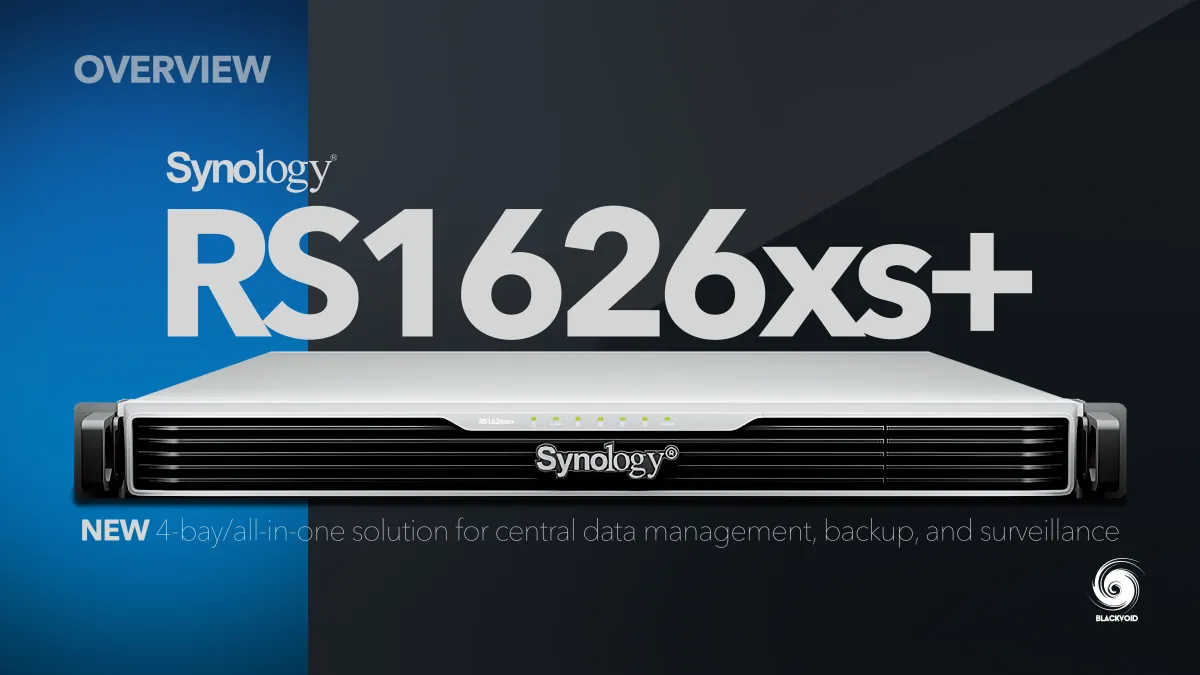
While 2025 focused on modest DS updates and upgrades, 2026 will be dedicated to the RS and FS lineups. With nearly half a dozen rack‑mount models planned, we’ll begin with a refresh of the familiar, compact 4‑bay, 1U RS1626xs+.


Marketed as an all‑in‑one solution for data management, backup, and surveillance, the new RS1626xs+ delivers several significant upgrades over its predecessor, the RS1619xs+.
Enterprise-grade performance and scalability in a slim 1U chassis
Maintaining the form factor and number of disks supported, the new x26 model has more than a few performance upgrades under the hood.
Synology kept the same CPU vendor but upgraded the processor, moving from the Xeon D-1527 used in the RS1619xs+ to the Xeon D-1726 (introduced in 2022). While some may view this as a conservative choice rather than a pursuit of the latest silicon, and AMD alternatives could have been considered, Synology again opted to stick with its established supplier and design approach.
Engineered for intensive workloads
The CPU is a clear upgrade: it moves to a 6‑core/12‑thread design with a turbo boost up to 3.5 GHz while maintaining a 70 W TDP. By comparison, the previous model used a quad‑core, 35 W part and shipped with half the RAM. The RS1626xs+ now ships with 16 GB of RAM and is expandable to 64 GB, representing another meaningful hardware improvement.
Solid Performance
Over 84,000 4K random write IOPS and 2,100/1,500 MB/s sequential read/write throughput supports office-wide applications
On-Demand Expansion
Scale up to 16 drive bays with one Synology RX1225RP Expansion Unit
Versatile Networking
Dual 10GbE ports and PCIe expansion for additional high-speed network ports
The higher CPU and RAM capacity require more power, so the 2026 model replaces the previous 150 W power supply with a 250 W unit while retaining the option for a redundant power port.

The power increase also supports upgraded networking. The previous quad 1 GbE (4×1 GbE) ports have been replaced by dual 10 GbE (2×10 GbE) RJ45 ports (10GBASE-T), and the unit retains a dedicated 1 GbE management port as expected on XS+ models.
Internally, the PCIe expansion has been improved as well. It still accepts small‑form‑factor PCIe cards (for 10 GbE, 25 GbE, etc.), but the slot is now PCIe Gen4 ×8 instead of Gen3. That doubles theoretical throughput from roughly 7.9 GB/s (Gen3 ×8) to about 15.8 GB/s (Gen4 ×8), a meaningful upgrade for a compact 1U chassis.
Storage Tiering
Automatically offload inactive data to lower-cost tiers to optimize storage ROI and preserve high-performance storage for active workloads
Like its predecessor, the RS1626xs+ includes two M.2 NVMe bays for high‑speed caching that don’t occupy the primary drive bays. Although Synology introduced the HCL 5.0 HDD compatibility policy alongside DSM 7.3 last year, that policy does not apply to the XS+ lineup.
 Luka Manestar
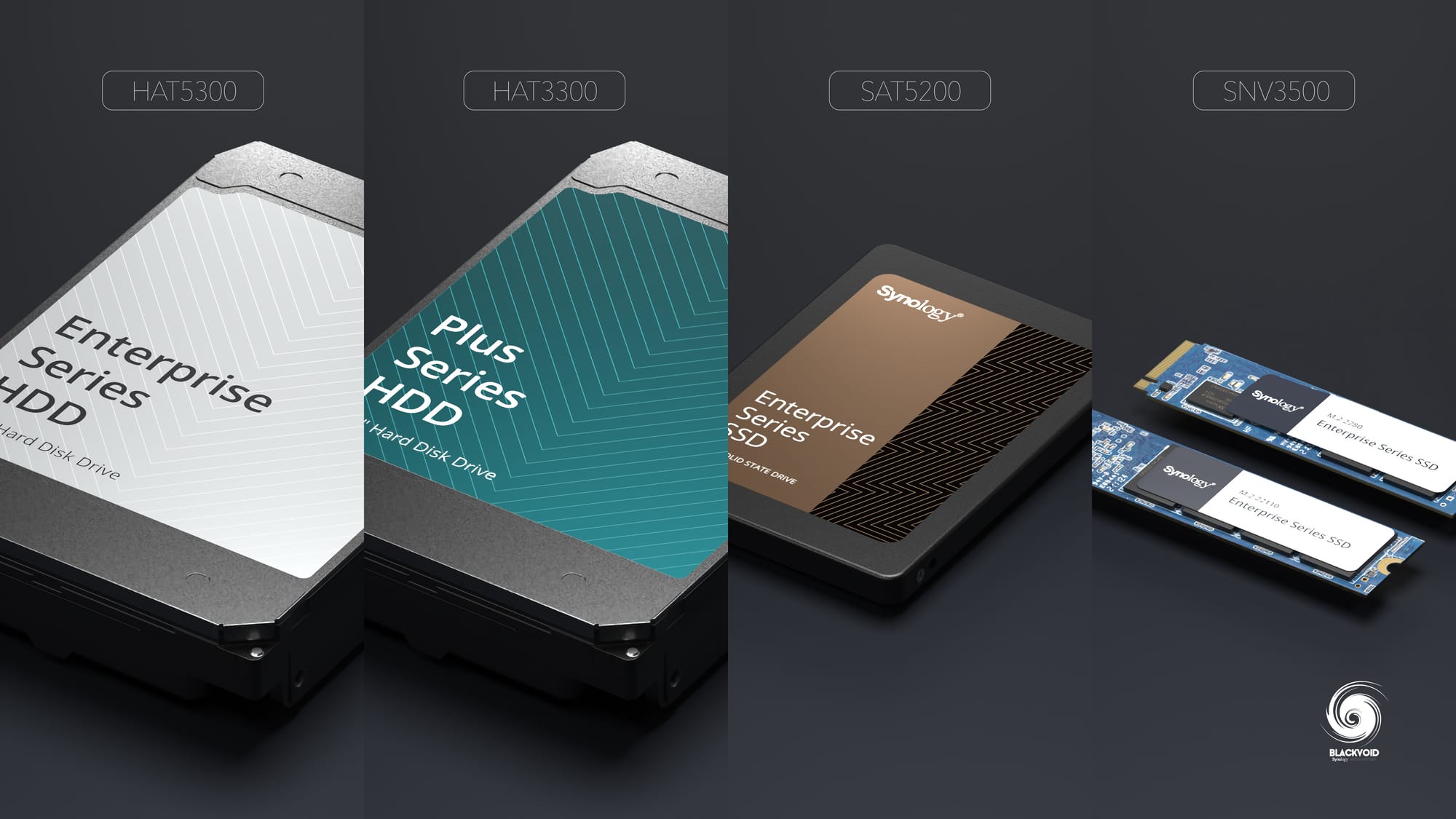
This restriction applies to both NVMe and HDD storage. Only Synology‑qualified drives are supported, and for HDDs, that means the enterprise HAT5300 series (not the HAT3300). Despite the hardware improvements, the RS1626xs+ remains targeted toward small‑to‑medium businesses and enterprise deployments.
Finally, if the compact 1U, 4‑bay chassis does not provide enough capacity, the RS1626xs+ supports Synology’s RX1225RP 12‑bay (2U) expansion unit introduced last year. Connected via the mini‑SAS HD interface, it expands the system to 16 bays and supports up to 1 PB of storage when the NAS is configured with 64 GB of RAM.
The RS1626xs+ includes dual USB 3.2 Gen 1 (5 Gbps) ports on the rear for connecting third‑party disk enclosures for backup or data transfer. It is covered by a five‑year Synology warranty and weighs just under 10 kg (without drives). The chassis uses standard 1U rack height and 19‑inch width, but is deeper than the 2019 model — 66.8 cm overall, roughly 15 cm longer.
More power, speed, and capabilities, plus a modernized network stack — in short, a refresh of Synology’s entry‑level XS+ rack appliance. The RS1626xs+ is expected in early summer 2026 (market timing may vary). Pricing hasn’t been announced, but it will likely be similar to the current model or modestly higher to reflect the hardware upgrades.
Current disk prices combined with the requirement to use Synology‑qualified enterprise drives make this unit a hard sell for home users; as a result, its customer base will likely be predominantly business. That said, it’s a solid upgrade for the XS+ lineup — and kudos to Synology for continuing to support the compact 1U/4‑bay segment despite the stricter drive requirements. We look forward to testing the RS1626xs+ and evaluating how well it meets real‑world business workloads.