Synology RS6426xs+ overview

They say all good things come in threes, and today we already had two new RS models from the existing business-enterprise XS+ lineup, the RS3626xs+ and RS4826xs+.
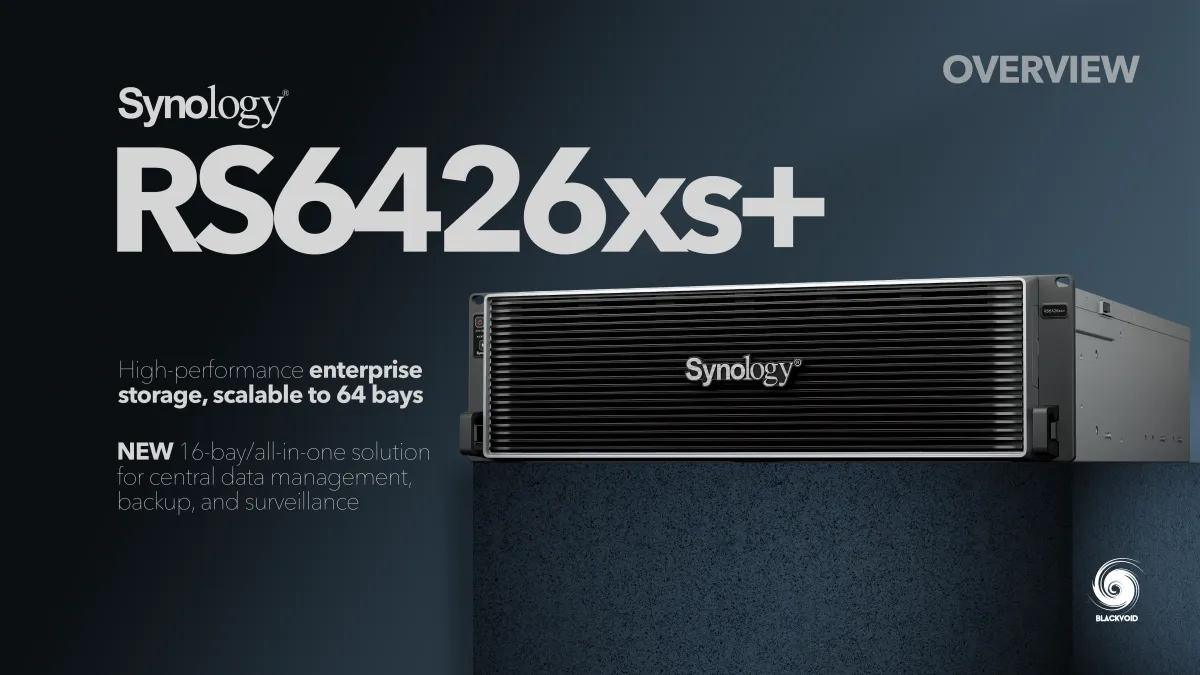
The final device is yet another new model, just like the RS4826xs+ was, not so much that, so far we have not seen a 3U model by Synology, but more in terms of the overall support of up to 64 drives without peeking into the HD segment.
This does not mean that this unit has anything to do with the said HD lineup; no, this is still a standard 16-bay NAS with an option to support up to 64 drives with no less than four (4) additional RX1225RP expansions.
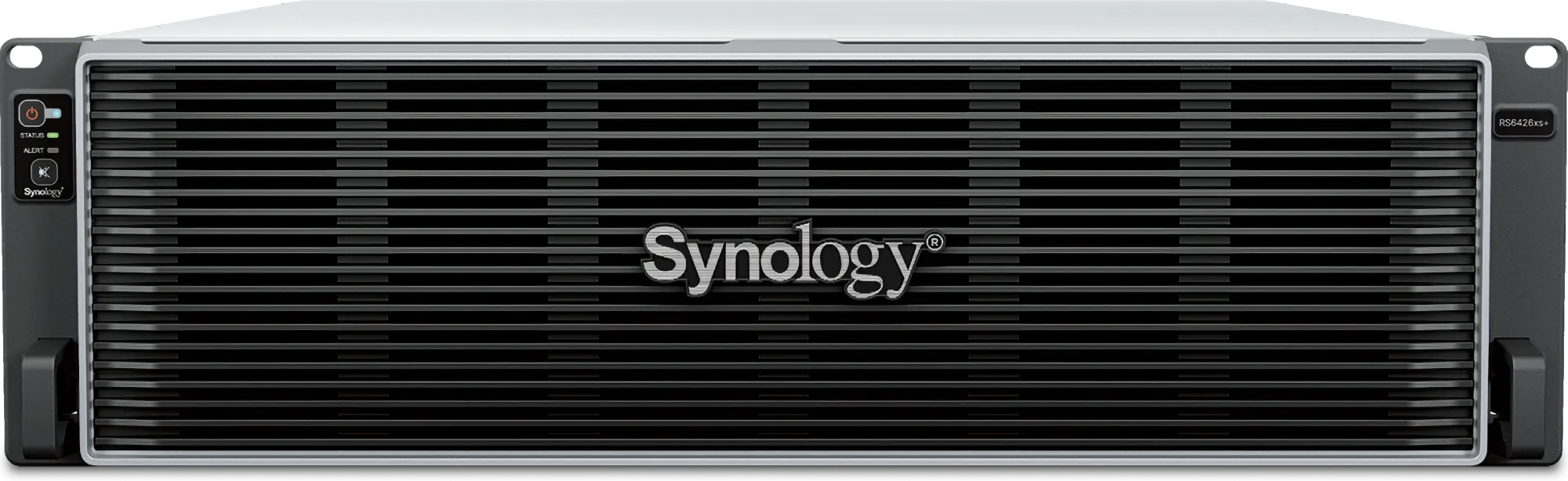
Because of this, the new name that we have not seen before is RS6426xs+, clearly indicating a fresh 2026 release with a maximum number of 64 supported Synology drives.
High-speed performance: Over 165,000 4K random write IOPS and 6,700/4,300 MB/s sequential read/write performance supports demanding workloads
Presently, and in the past six years, Synology has rolled out only a few 3U or 4U models, being the HD6500 and the RS4021xs+. While the HD model is in a class of its own, the RS4021xs+, as already mentioned in the RS4826xs+ overview article, will probably be deprecated because of that new model, and with the introduction of this 64-bay one, we can be certain that it has seen its last days.
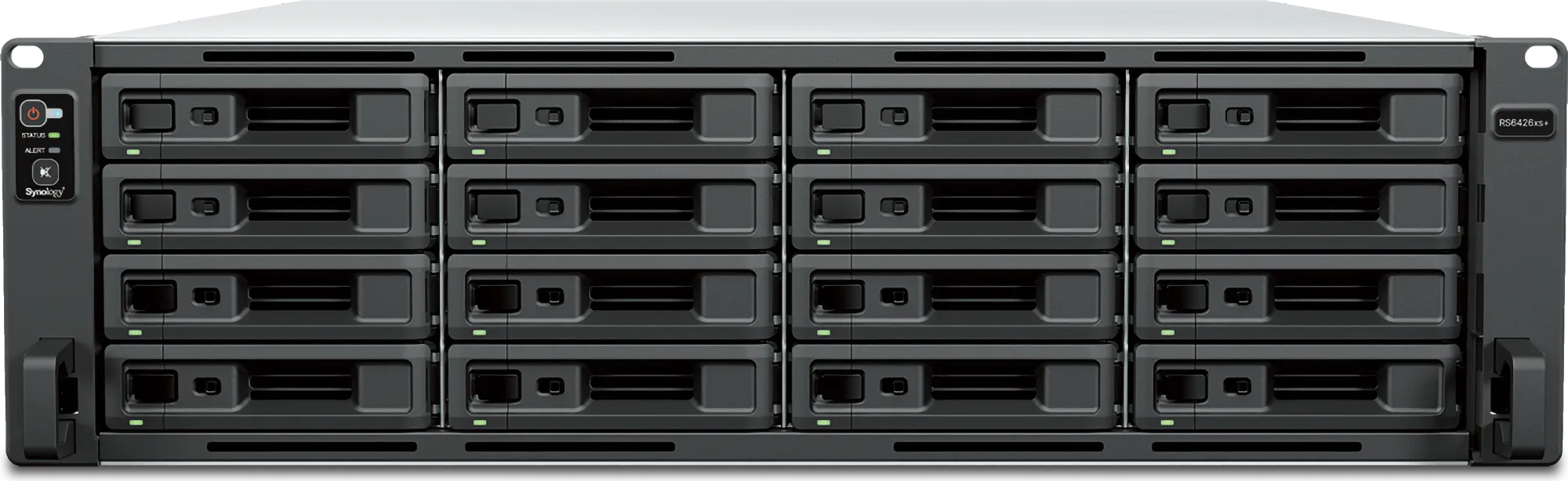
Comparing the new RS6426xs+ with the X21 3U device is no match or fair game, but it also raises a question, what are the benefits of this new model compared to the 12-bay RS4826xs+?
Despite its compact 18 kg form factor, the RS6426xs+ matches the 48-bay model's specifications: Intel Xeon D-1739 8-core CPU, 16 GB RAM (up to 96 GB), and two PCIe 4.0 slots. The rear panel design is nearly identical, with one key difference.
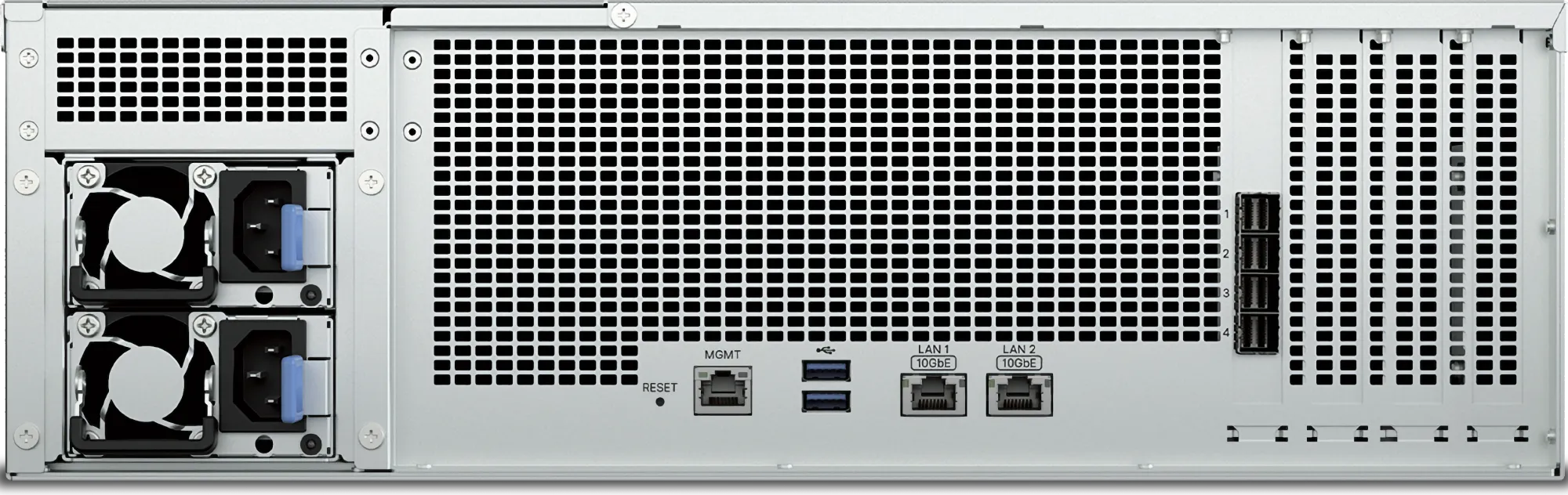
That difference is, of course, one additional mini-SAS HD port, raising the total number of RX1225RP-supported expansions to four. Along with those, we have a dual 10GbE network setup, a single 1GbE management port, and dual USB 3.2 Gen 1 for all those external connections as well.
- DDR4 ECC RDIMM: D4ER02-16G
- Expansion Units: RX1225RP
- Enterprise Series 3.5" SATA HDD: HAT5300 Series
- Enterprise Series 2.5" SATA SSD: SAT5200 Series
- M.2 SSD & 10GbE Combo Adapter Card: E10M20-T1
- M.2 SSD Adapter Card: M2D20
- 25GbE Network Interface Card: E25G30-F2
- 10GbE Network Interface Card: E10G30-F2/E10G30-T2/E10G30-T1
- Rail Kit Sliding: RKS-02
The optional accessories list is identical to the RS4826xs+ as well futher proving that the only real difference is the extra four drives, and support for one more expansion unit. To be fair, there is also a slight increase in random IOPS numbers as well as sequential read and write (about 8%), but those numbers will vary anyway depending on the workload and the rest of the environment.
Due to its sheer size and capacity capability the RS6426xs+ would be a perfect solution for large organizations and a vast amount of data, as well as a surveillance storage point, and even a virtualization task or two.
With the introduction of the Synology Tiering solution in the recent DSM versions, all RS units are more than capable of performing both hot and cold roles, and RS6426xs+ is no exception.
Synology Tiering intelligently manages data across performance and capacity tiers to maximize storage efficiency and improve storage economics by automatically placing colder data on cost-effective tiers. The RS6426xs+ can be configured as part of a hot or cold storage tier depending on deployment requirements
 Luka Manestar
PCIe 4.0 connectivity, paired with ample RAM and storage, positions these systems as practical on-premises LLM hosts—particularly with GPU acceleration. Though Synology would need to provide official GPU support, they've already demonstrated GPU integration in their surveillance DVA line for deep-video analytics. Implementing similar support for their NAS portfolio would be a logical next step.
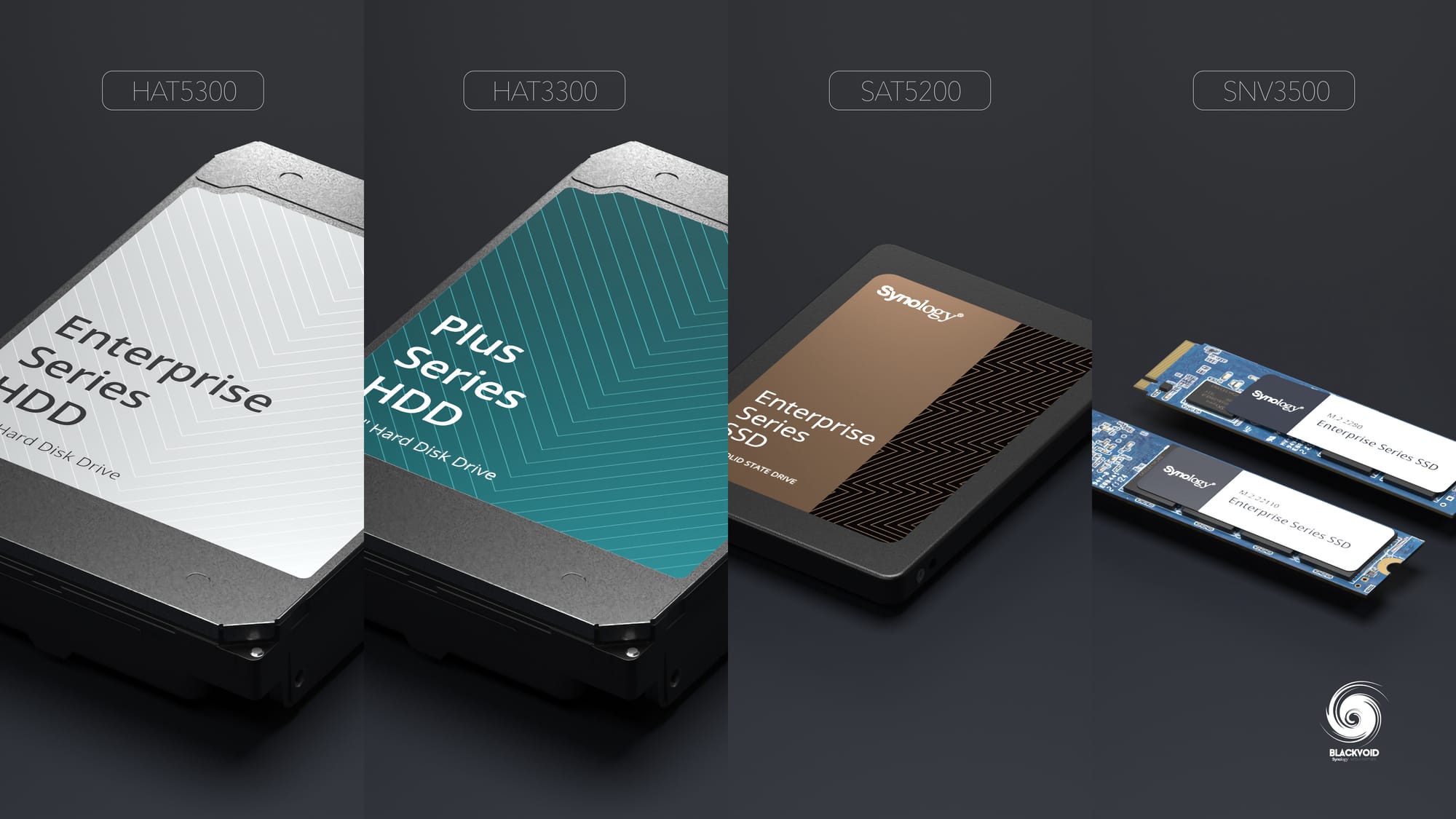
As with the previous two models, it is only logical that this device has the same disk policy. This would be the strict HCL 4.0 one, meaning that only Synology-branded HDDs, SSDs, and M.2 models are supported. Trying to install any other brand or off-list drive will put the user on a negative path that ends with no support or warranty from Synology.
Speaking of warranty, all XS+ models come with comprehensive hardware replacement and premium technical support services offered under Synology’s 5-year limited warranty.
Unlike the other two XS+ models, this particular one will globally roll out on June 10th, with the APAC launch happening today. The pricing is still unknown, but considering the targeted audience, these are not models that will be bought off the shelf, so final pricing will depend on a number of business factors.