Synology FS6420 & FS3420 overview

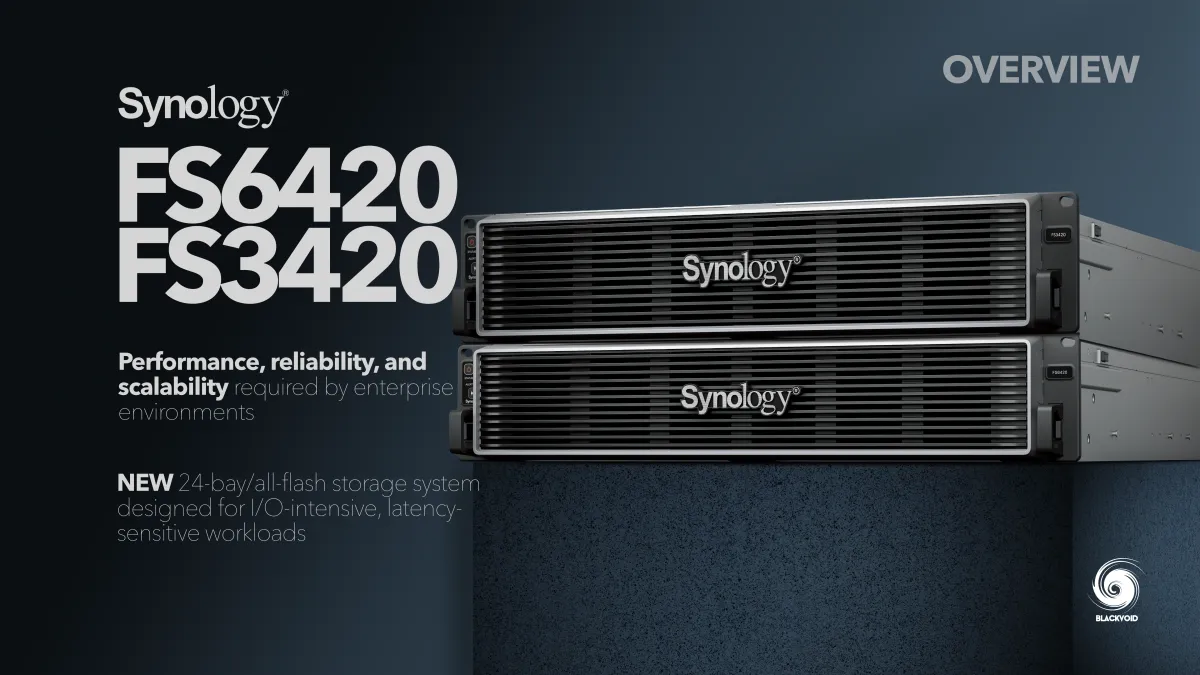
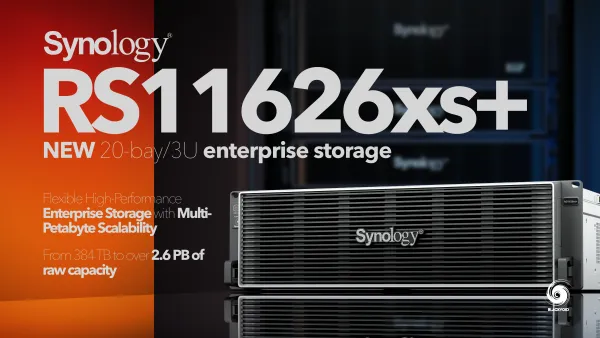
Last week, Synology rolled out three XS+ models from its RS lineup and simultaneously refreshed its popular FS segment with second-generation versions of its two existing 24-bay models.

Identical on the exterior except for minor differences on the rear panel, these 2U rack devices deliver substantial processing power and expansion capabilities through Gen4 x8 and x16 slots.
While the XS+ RS models exclusively feature Intel Xeon-class processors, the FS lineup takes a different approach. The FS3420 utilizes Intel processor, whereas the FS6420 is powered by AMD EPYC silicon.
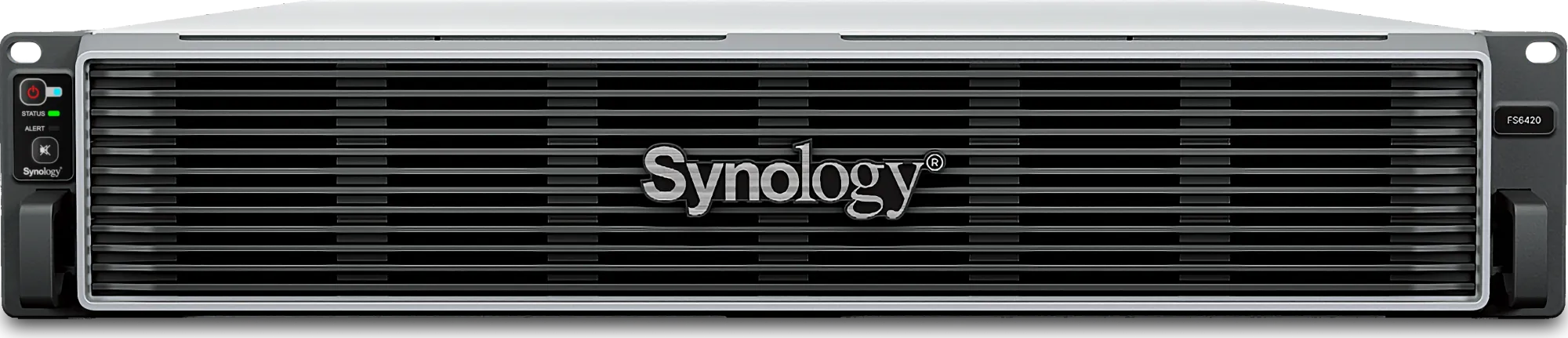
Starting with the FS6420 model, this 24-bay 2U rack-mounted NAS represents a significant generational leap over its predecessor, the FS6400, in both processing power and overall hardware configuration.
The AMD EPYC 7303 processor, despite being released in 2021, marks a substantial upgrade from the aging Skylake-based Intel Xeon Silver 4110 from 2017. With 16 cores and 32 threads in a single-socket configuration, the FS6420 now supports up to 1024 GB of RAM across 16 slots using 64 GB modules—double the maximum capacity of its predecessor. The standard configuration has also doubled from 32 GB to 64 GB.
While the EPYC's 155W TDP is double that of the older Skylake silicon, the performance gains justify the increased power consumption. The EPYC processor delivers higher clock speeds, superior instructions-per-cycle (IPC) efficiency thanks to its modern Zen 3 architecture, and demonstrates clear advantages in multi-threaded workloads. Overall, the 7303 offers superior value for compute-intensive applications and outperforms across most workloads.
The FS3420, successor to the FS3400, shows more modest improvements. From a CPU perspective, the upgrade is incremental. Both generations use 2021 Ice Lake Intel Xeon processors. The FS3420 upgrades from the D-1541 to the D-1739, the same processor used in Synology's 2026 RS XS+ refreshed lineup. This change adds two cores and slightly increased L3 cache, while expanding RAM capacity from 16 GB standard (128 GB maximum) to 32 GB standard with support for up to 192 GB.
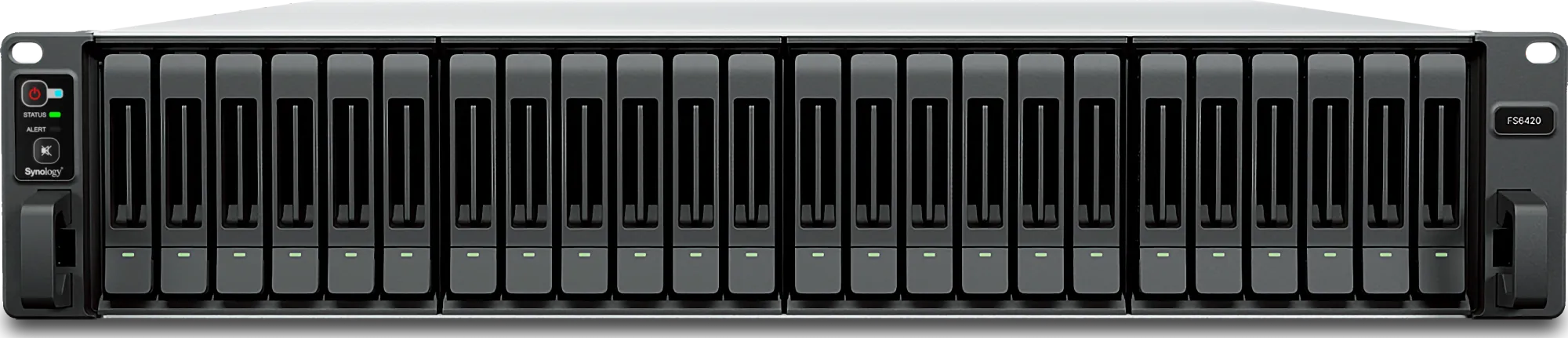
Both devices have received additional internal upgrades aligned with Synology's 2026 RS lineup refresh, primarily the transition to PCIe 4.0. The FS6420 benefits most notably with dual full-length Gen4 x16 slots, while the FS3420 adopts the same dual Gen4 x8 slot configuration found across the RS XS+ models.
The widespread adoption of PCIe 4.0 across the RS and FS portfolios this year is significant, as it enables potential GPU support, a development that could allow Synology to offer on-device LLM hosting capabilities through compatible graphics cards. The software foundation for this is already in place with the introduction of Synology AI Console earlier this year, positioning the hardware to leverage these capabilities as they become available.
 Luka Manestar
 Luka Manestar
Both models feature a significantly cleaner rear panel layout, with notable connectivity changes. The 1GbE port array has been removed entirely, and 10GbE connectivity is now limited to two interfaces. The legacy serial port has been replaced with a dedicated 1GbE management port, while older USB 3.0 ports have been upgraded to USB 3.2 Gen 1 specification, offering 5 Gbps speeds.
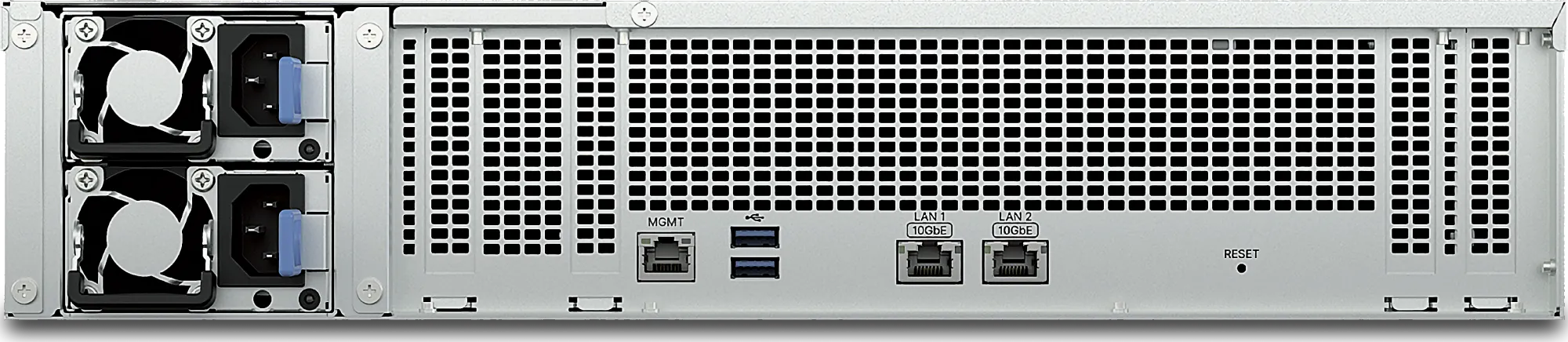
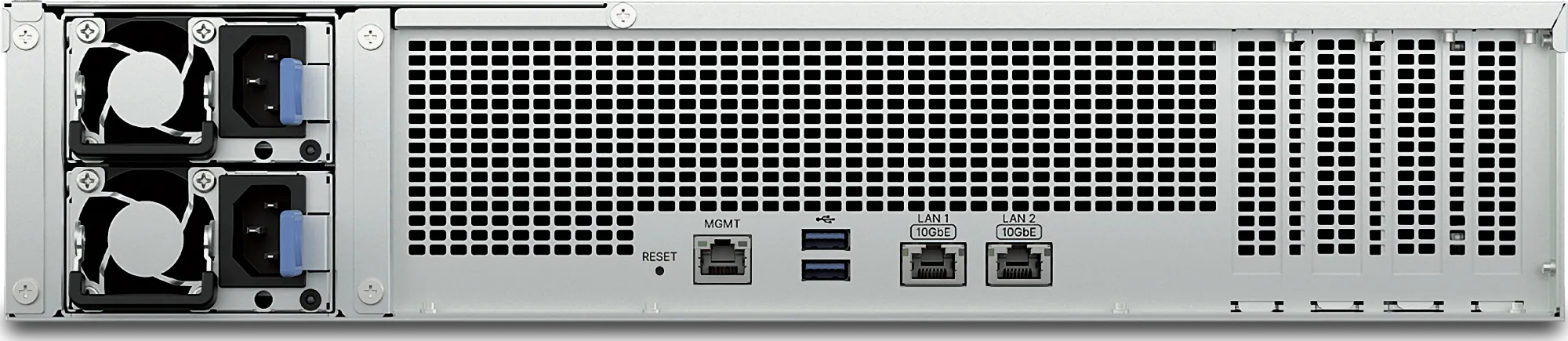
The dual redundant power supplies on the left side provide essential failover protection for mission-critical deployments, though the compact ventilation design warrants careful consideration. These units should be installed in dedicated rack enclosures to manage noise levels appropriately.
This streamlined connectivity design delivers a more contemporary port configuration that gives end users the flexibility to populate PCIe slots with compatible expansion cards, allowing the NAS to be customized for specific requirements.
Both new FS models maintain the familiar physical footprint and 2U form factor, with a depth under 800 mm compatible with the Synology RKS-02 rail kit. Weight remains relatively consistent across generations at 15.5 kg.
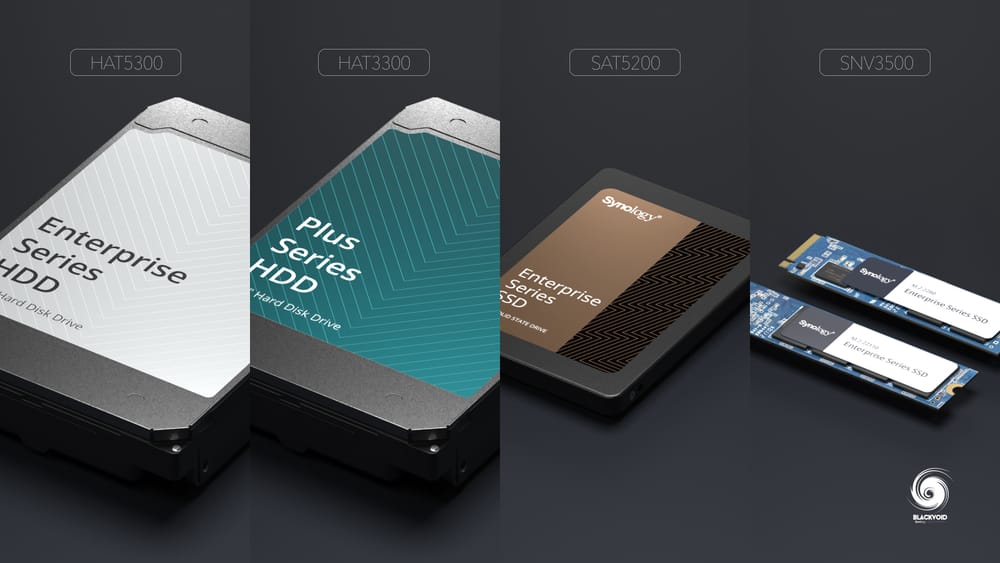
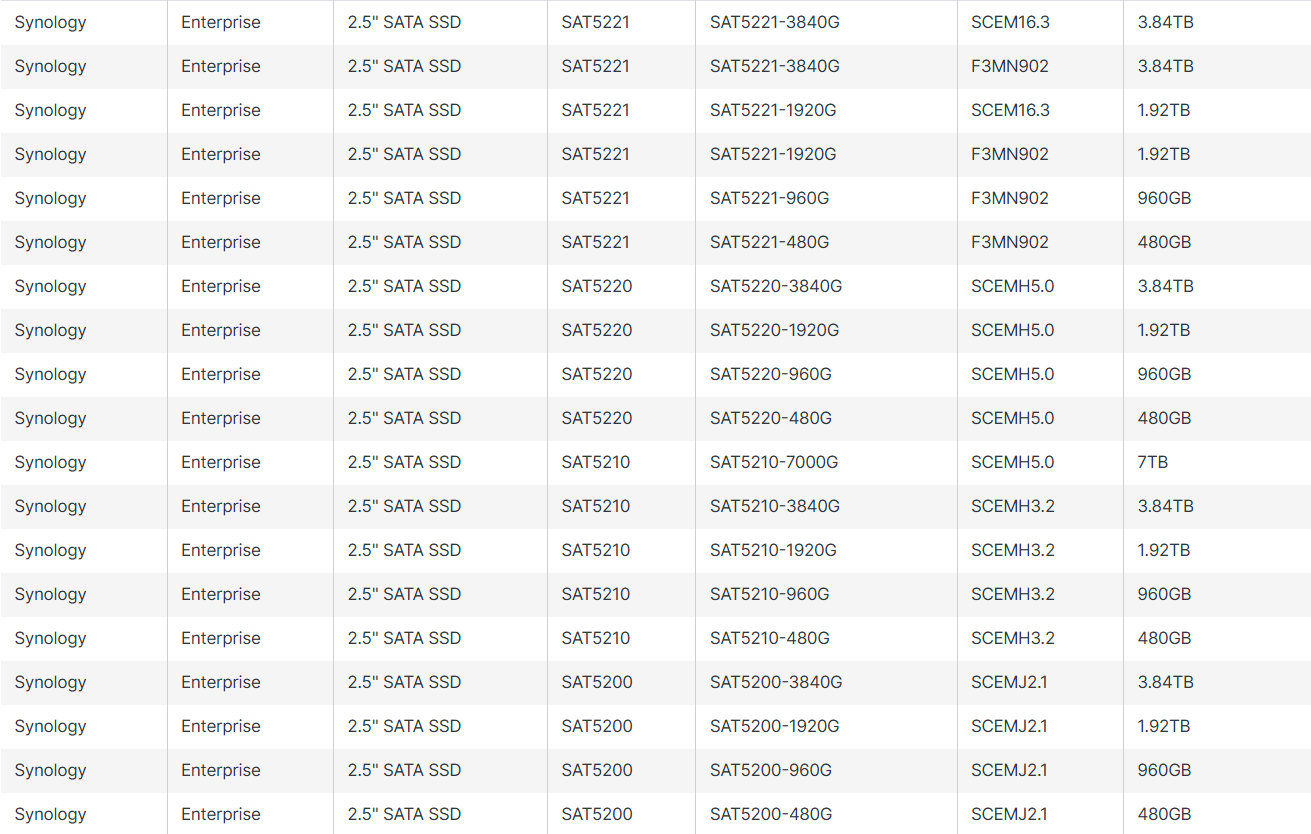
However, compatibility has shifted notably in this generation, particularly regarding SSDs. Unlike their predecessors, the FS6400 and FS3400 which supported third-party drives, the new FS6420 and FS3420 are restricted to Synology's proprietary SAT5200 series, available in capacities ranging from 960 GB to 7 TB.
- DDR4 ECC RDIMM: D4ER02-64G / D4ER03-32G (for the FS3420)
- Enterprise Series 2.5" SATA SSD: SAT5200 Series
- 25GbE Network Interface Card: E25G30-F2
- 10GbE Network Interface Card: E10G30-F2/E10G30-T2/E10G30-T1
- Rail Kit Sliding: RKS-02
As expected, both new models come with Synology's standard 5-year warranty. Official pricing will be announced shortly, with global availability anticipated in June 2026.