Synology PAS7700 global launch

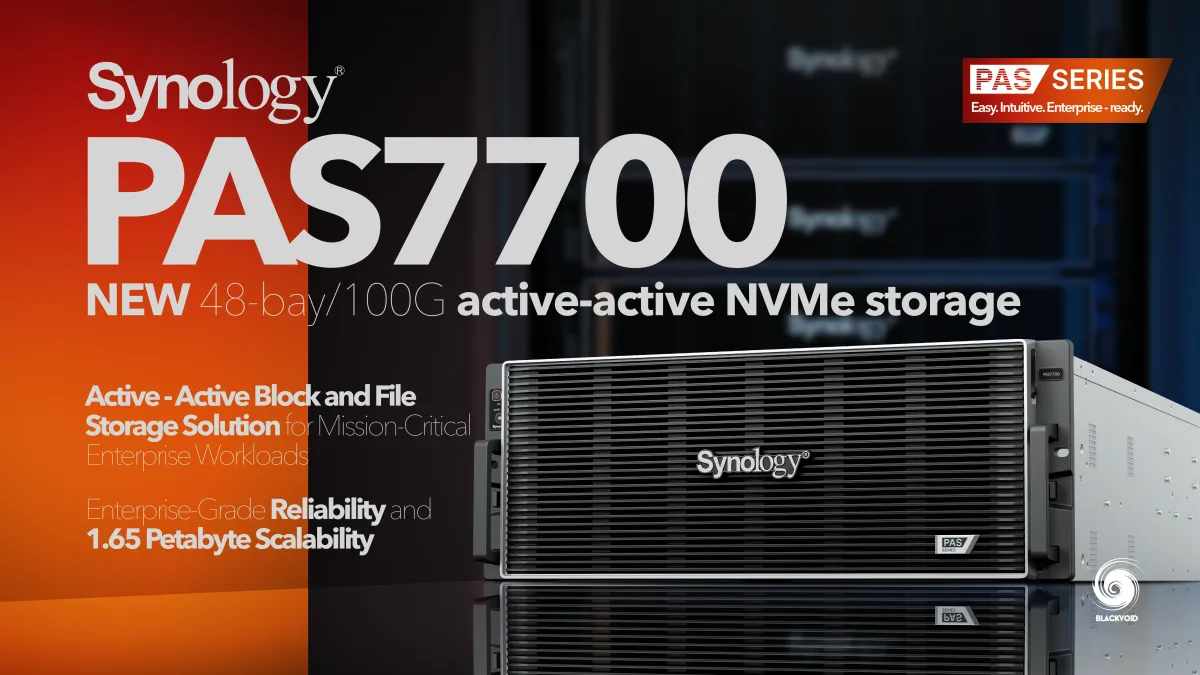
It is clear that 2026 has solidified Synology's mindset as an enterprise-focused vendor. Following a mild 2025, this year has seen a concentrated release of mid-range and enterprise models across 1U-3U form factors. May's announcement marks a significant milestone, the global rollout of Synology's flagship offering, the PAS7700, a 4U pure NVMe storage platform and the first model in the new Parallel Active Station (PAS) series.
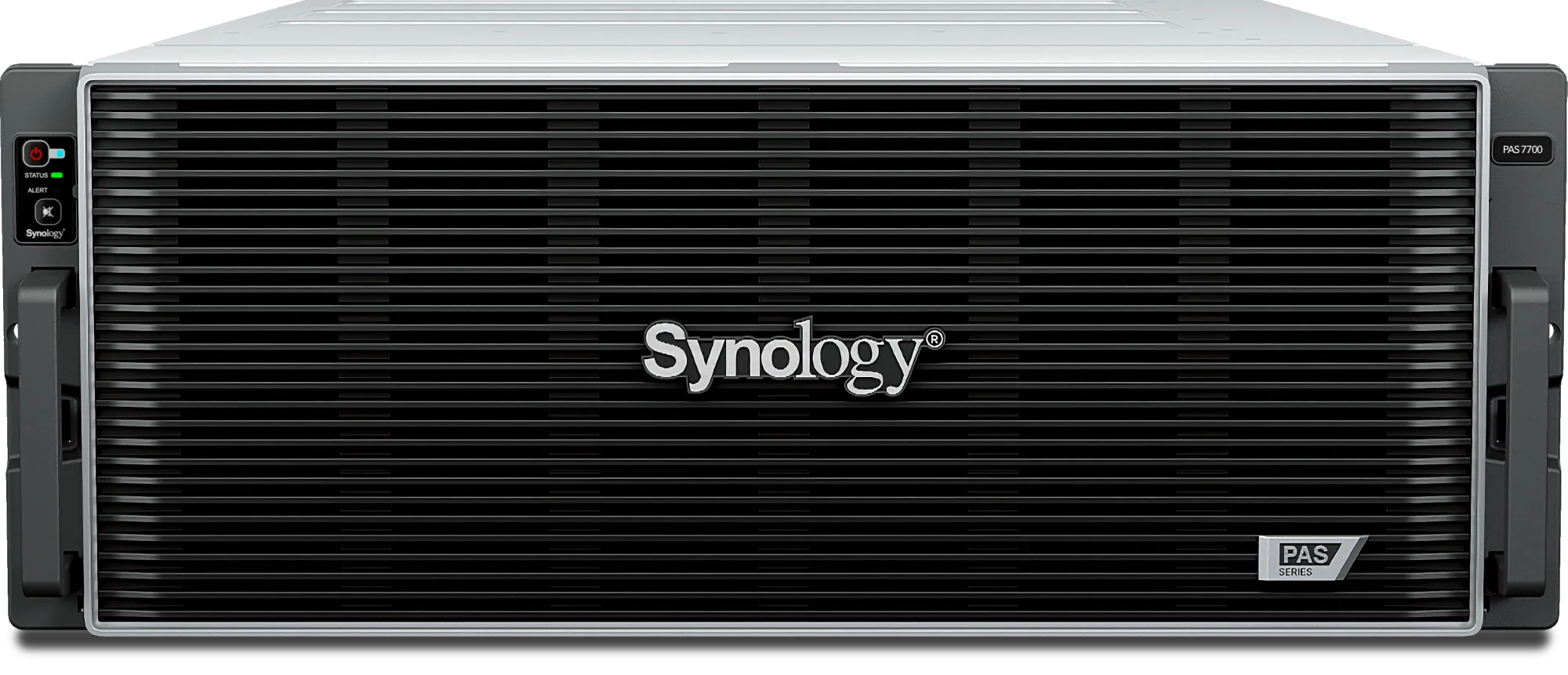
Advertised as an active-active block and file storage solution, the PAS7700 is truly first for this 25-year-old company.
Announced back in 2024 and shown for the first time last year at Computex expo, there is a lot that is riding on this new unit.
PAS7700 is the culmination of Synology’s 25 years of engineering experience in data management and storage. By combining our deep software and hardware development expertise with close collaboration with partners and enterprise customers, we’ve engineered PAS7700 to deliver ultra-high performance at a price point previously unseen in the enterprise storage market.
Positioned at the top of Synology's portfolio, the PAS series is a mission-critical lineup intended for intensive workloads. The current PAS7700 model has some impressive hardware specifications to support those.
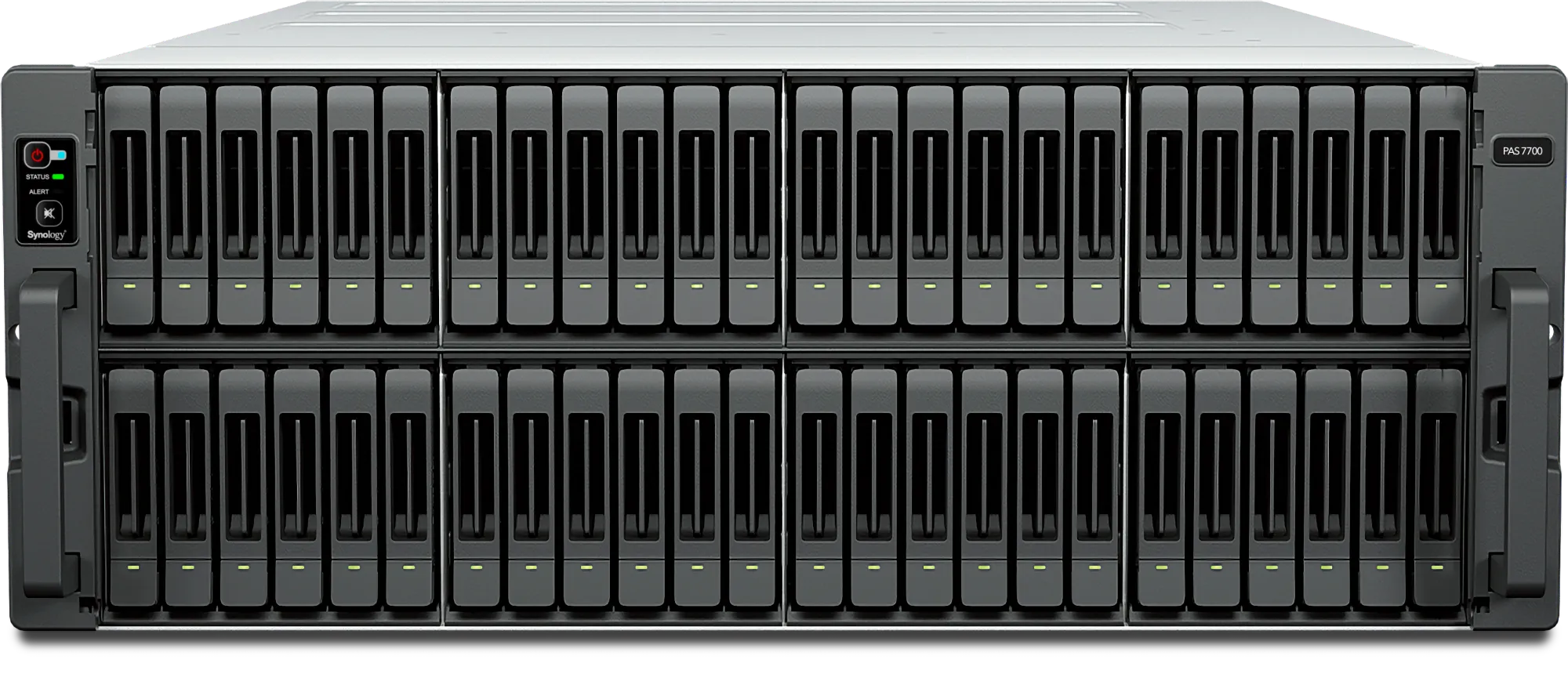
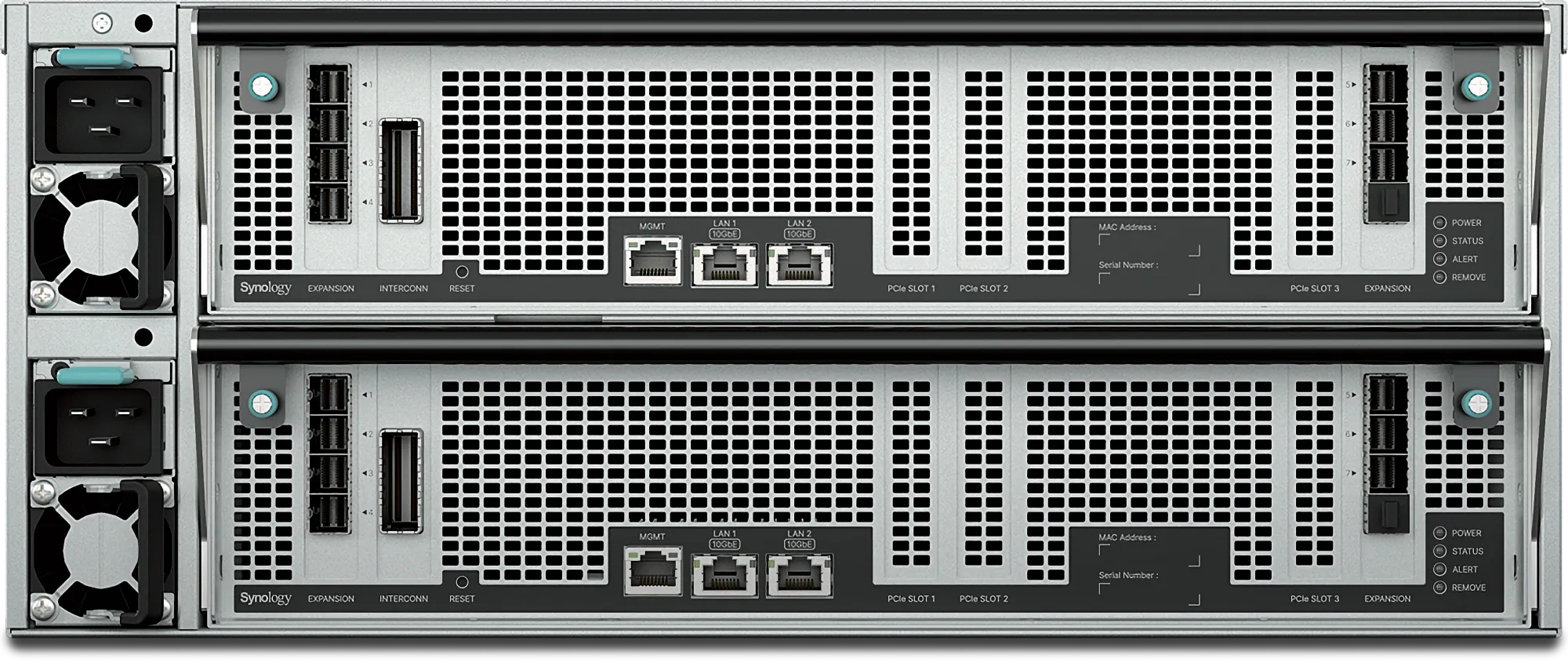
Designed as an active-active 4U appliance, the PAS7700 consists of two separate 2U controllers, each featuring an AMD EPYC 7443P 24-core CPU running at 2.85GHz with a maximum boost of up to 4GHz. The controllers start with 64GB of DDR4 ECC RDIMM memory, scalable up to 1TB each. In terms of storage, the PAS7700 can accommodate up to 48 U.2/U.3 NVMe SSDs, and with an additional seven expansion units, a total of 216 drives.
The network capabilities of the PAS7700 are equally impressive. It features a built-in dual 10GbE interface and a 1GbE management port, and supports a range of PCIe expansion options. With a single PCIe x16 Gen4 and dual PCIe x8 Gen4 slots, the setup can support a total of up to four 100GbE, twelve 25GbE, and 16 GFC network options.
Specifically, this means that each controller will support up to two 100GbE and six 25GbE ports (QSFP28), as well as six 16GFC (FC SFP+).
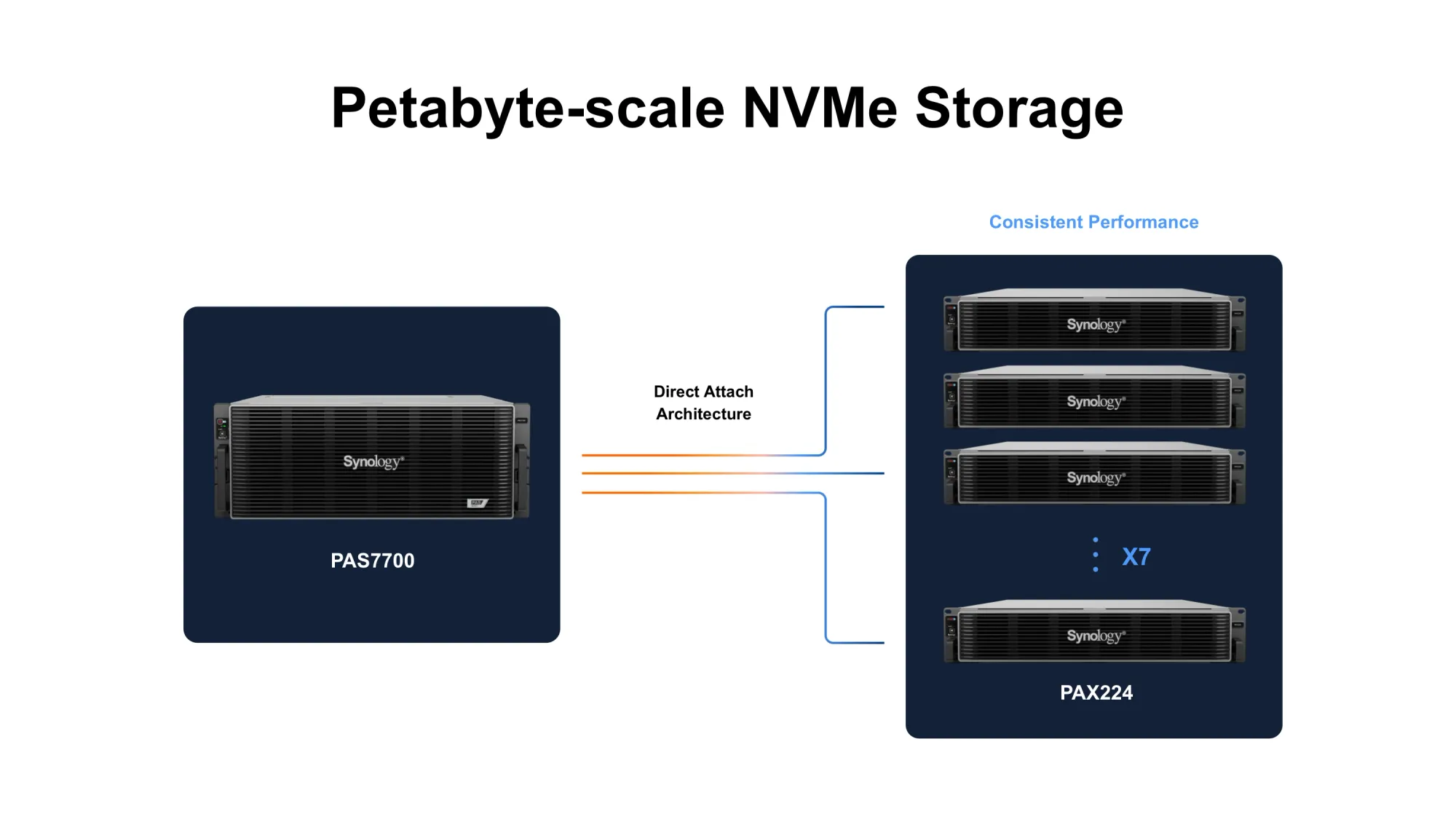
Alongside the main unit, Synology introduced the PAX224 expansion unit. This dedicated 2U rackmount expansion features 24 bays, compatible with U.2/U.3 NVMe SSDs, and connects via dual mini-SAS HD.
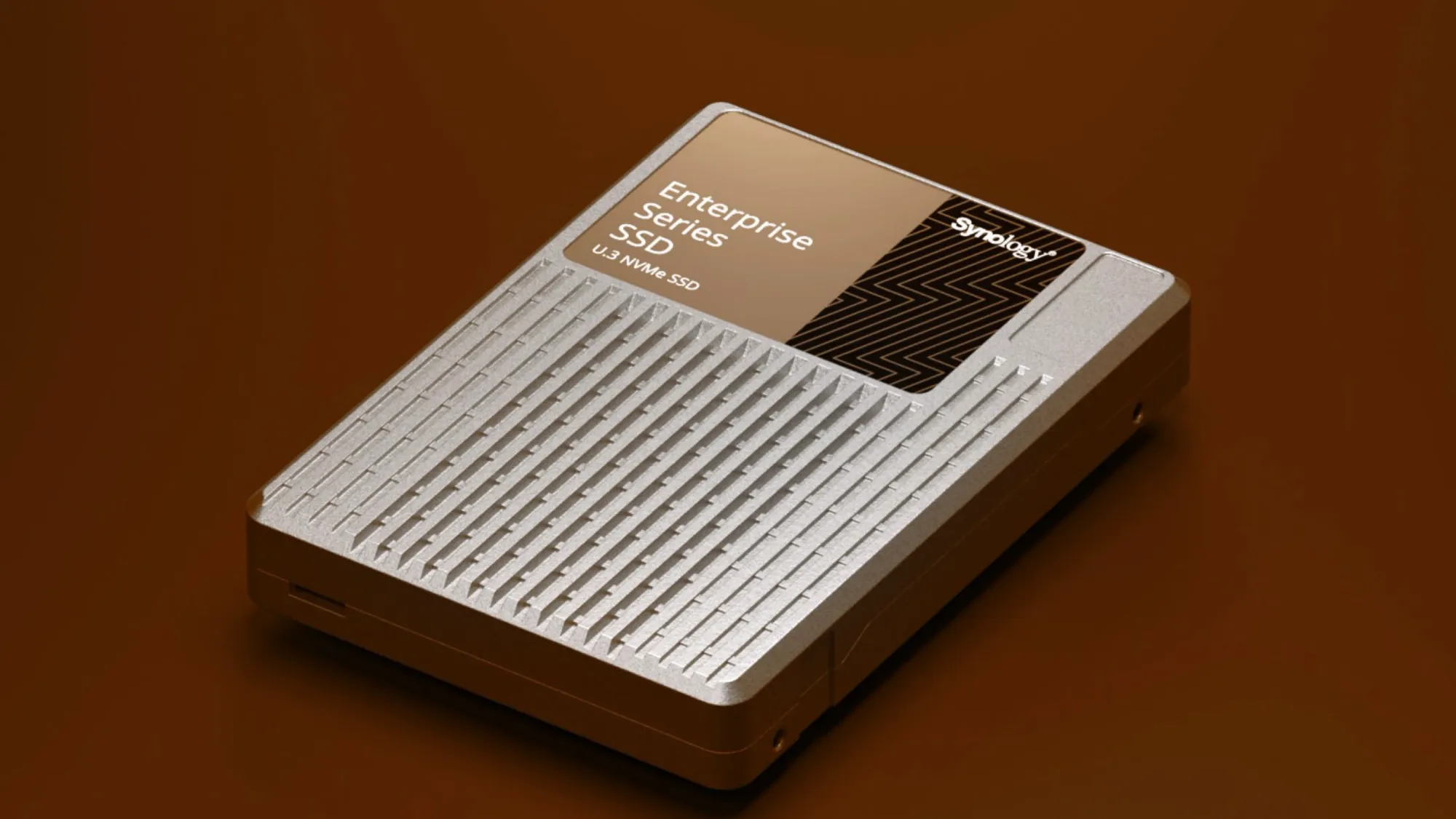
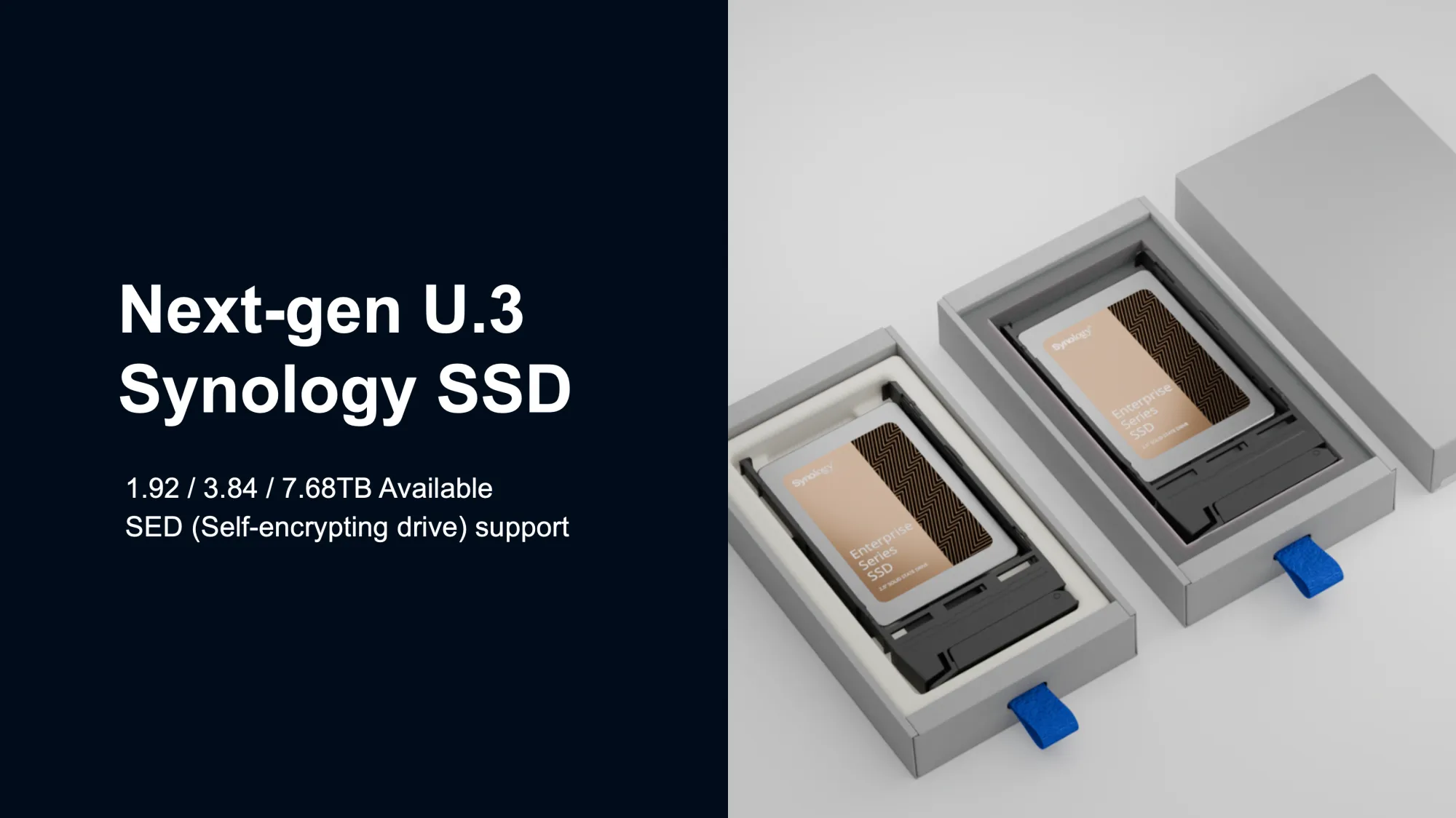
Synology also unveiled a new U.3 NVMe SSD, designed specifically for use with the PAS7700 unit. The new SED (self-encrypting drive) SPU7200D series is a dual-port SSD offering up to 140,000 4K write IOPS, with three available capacities (1.92/3.84/7.68 TB). Unlike any other Synology device so far, including the DP-series, drives will be preinstalled and screwed in, so there will be no need to spend time populating the PAS7700.
The appliance will have a four (4) drive minimum, with variable configuration up to the maximum number of 48.
The list price of new U.3 drives will start from €2.500 for the 1.92 TB, up to €7ooo for the 7.68 TB model.
High-Performance Block and File Storage
-
Up to 2,000,000 4K random read/write IOPS enables rapid transaction processing, real-time analytics, and high-speed VM storage
-
Dual active-active controllers featuring the AMD EPYC CPU and up to 1 TB of memory per controller help enable responsive file and block services at scale
-
Four 10GbE ports plus optional 100GbE NICs and HBAs deliver high-bandwidth connectivity for demanding applications and high-volume concurrent access
-
Supports 48 x 2.5” Synology NVMe SSD drives, expandable to 216 drives for 1.65 PB of raw storage with seven Synology PAX224 expansion units
-
Direct-to-host expansion unit architecture ensures superior bandwidth and reliability when scaling
Consequently, with a full complement of 216 drives, the PAS7700 provides 1.65 petabytes of raw storage, which, with an estimated 5:1 data reduction, can achieve an effective capacity of up to 8.25 petabytes.

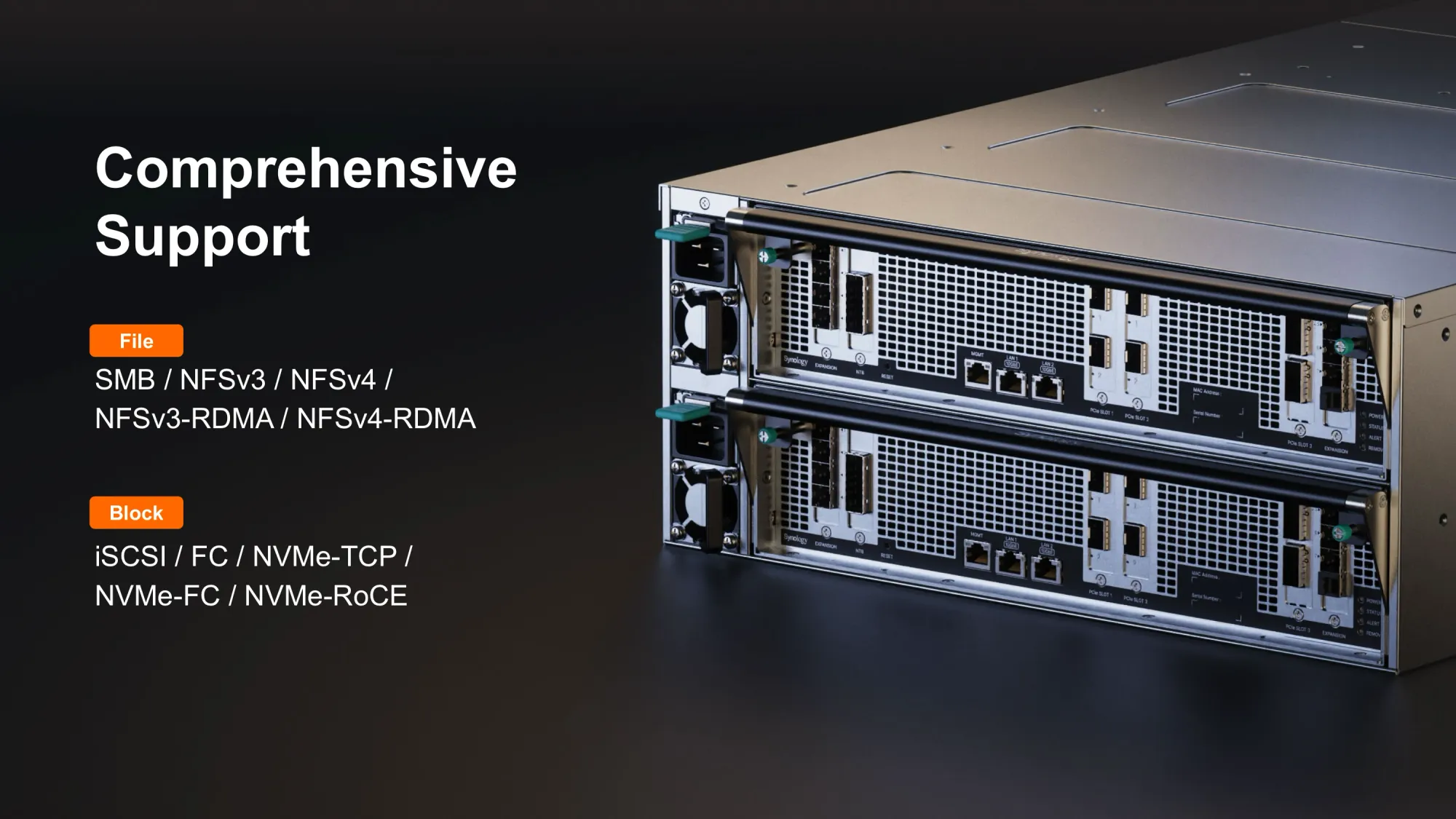
The PAS7700 system is designed for both file and block storage operations, supporting all known protocols, including both NVMe-FC and NVMe-oF, to fully leverage its all-NVMe architecture.
The PAS7700 integrates seamlessly with Kubernetes through Synology’s CSI-compliant driver, enabling volume snapshots via the Kubernetes API. Combined with support for SMB, NFS and iSCSI protocols, this ensures that IT teams can efficiently manage persistent storage for containerized
environments, delivering high performance, flexibility, and reliability.
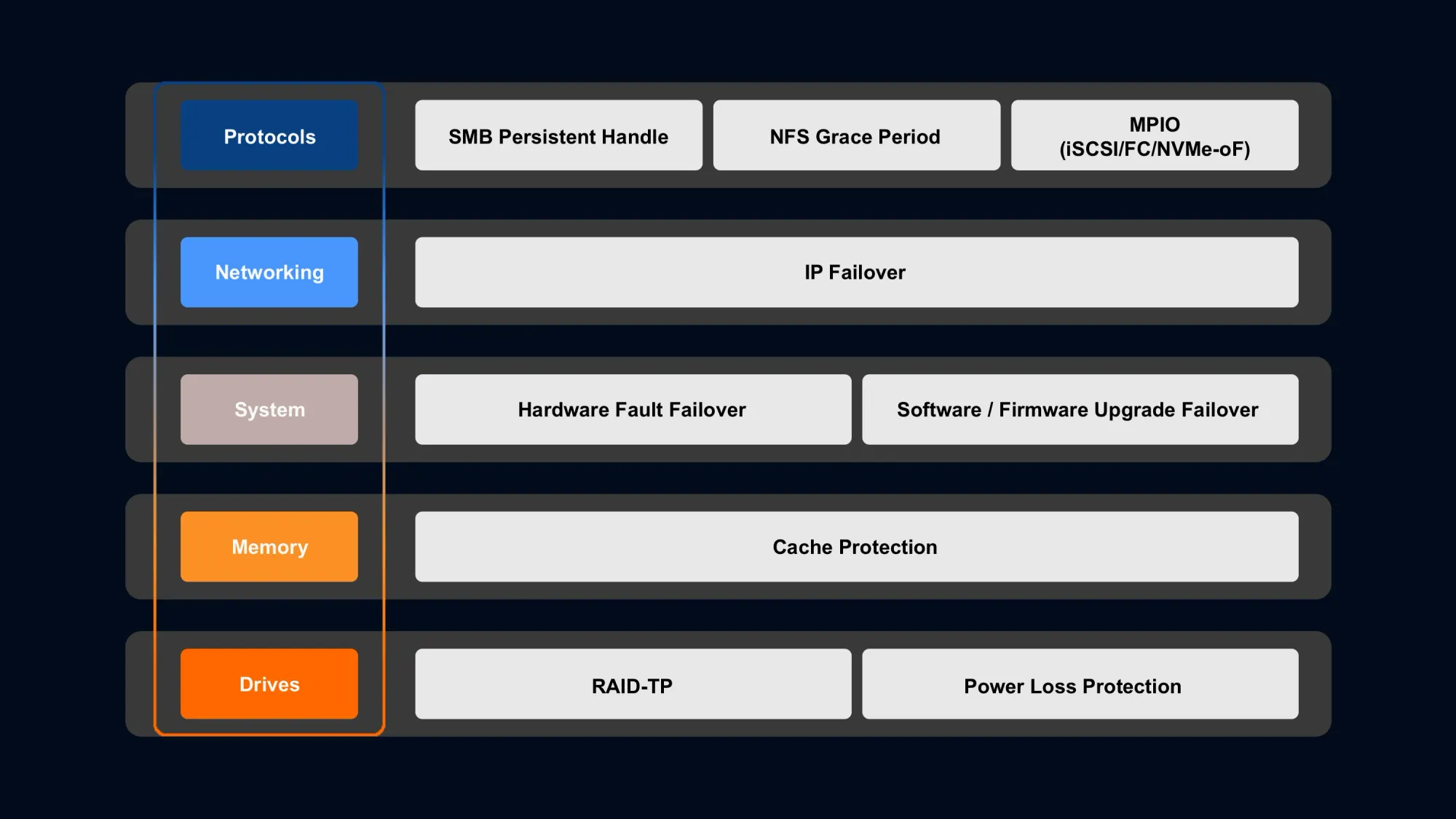
The primary goal of the PAS7700 system is to provide businesses with a non-disruptive environment, spanning from hardware to networking and protocols. It emphasizes multi-layered data security, starting from the ground up, including hardware encryption, MFA, volume encryption, immutability, and monitoring services.
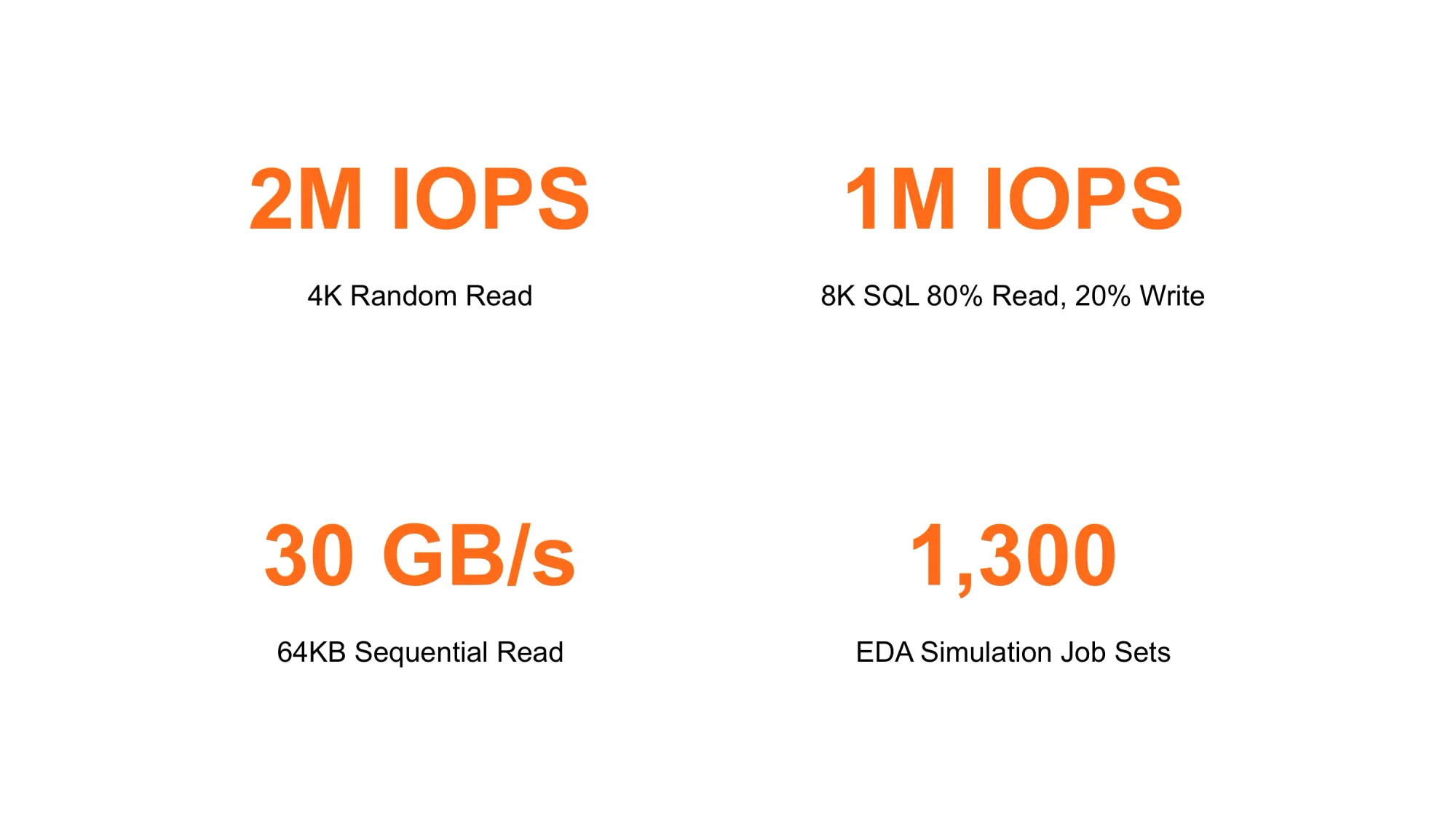
The setup of this scale has some massive performance along with it. The PAS7700 offers up to 2 million IOPS of 4K random read and 30GB/s 64KB sequential read. To put this in perspective, it can perform a boot up of up to 1000 VDI machines in 1 minute.
This storage solution presents a compelling value proposition, delivering competitive performance at approximately 30% of the cost of leading industry alternatives. Suggested list price is €67.500,00.
While the performance of this new lineup is impressive, Synology is also focusing on storage efficiency. The previously mentioned 8.25 petabytes of storage is achievable through smart tiering, as well as both inline and offline deduplication.
DSM Enterprise - the heart of the beast
 Luka Manestar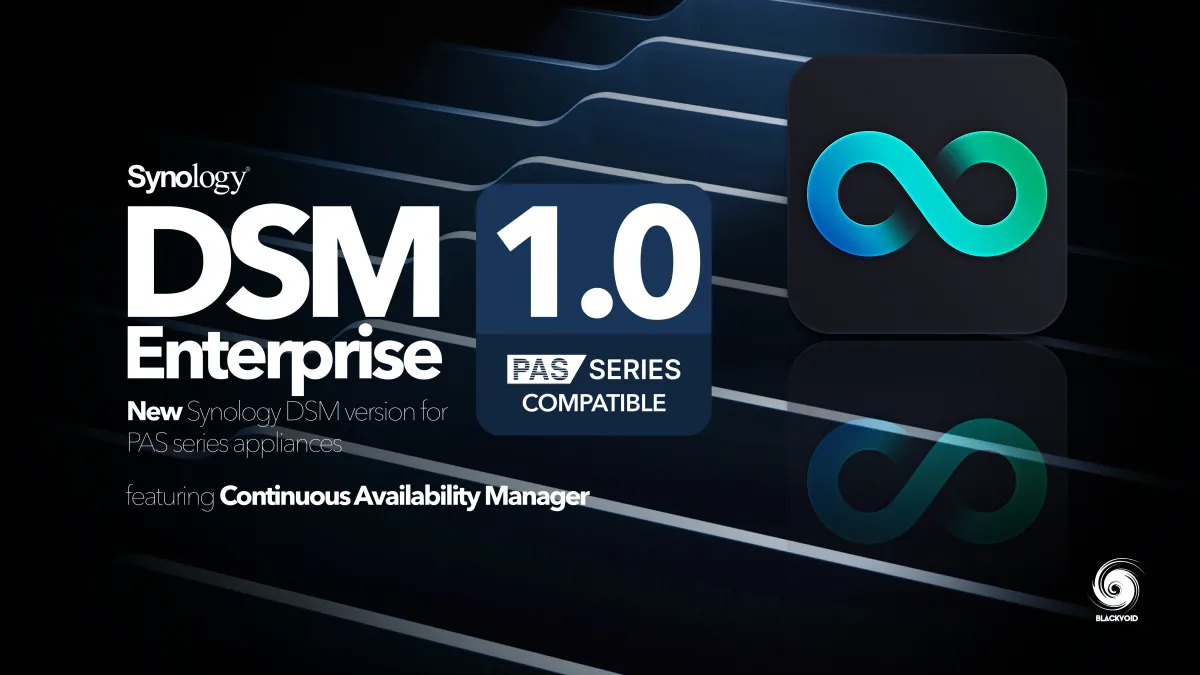
First look at new DSM Enterprise 1.0
For all this hardware to be usable in the best possible way, and to be able to deliver said speeds, Synology has applied a custom "operating system" called DSM Enterprise.
Upon buying a license directly from Synology (or resellers) and activating it via the Partner Portal, customers will receive a license file that will be ultimately installed and activated inside the OS running on the appliance.
This is nothing new, as Synology is no stranger to building a custom OS for a specific platform. Just last year, they released the ActiveProtect Manager to handle their DataProtection lineup. Also, we have SRM driving their routers, and of course, DSM for the entire lineup of small and large NAS devices.
PAM supports multipathing with Fibre Channel, and with the new Continuous Availability Manager, it supports server-side storage path failover for iSCSI LUNs and IP services.
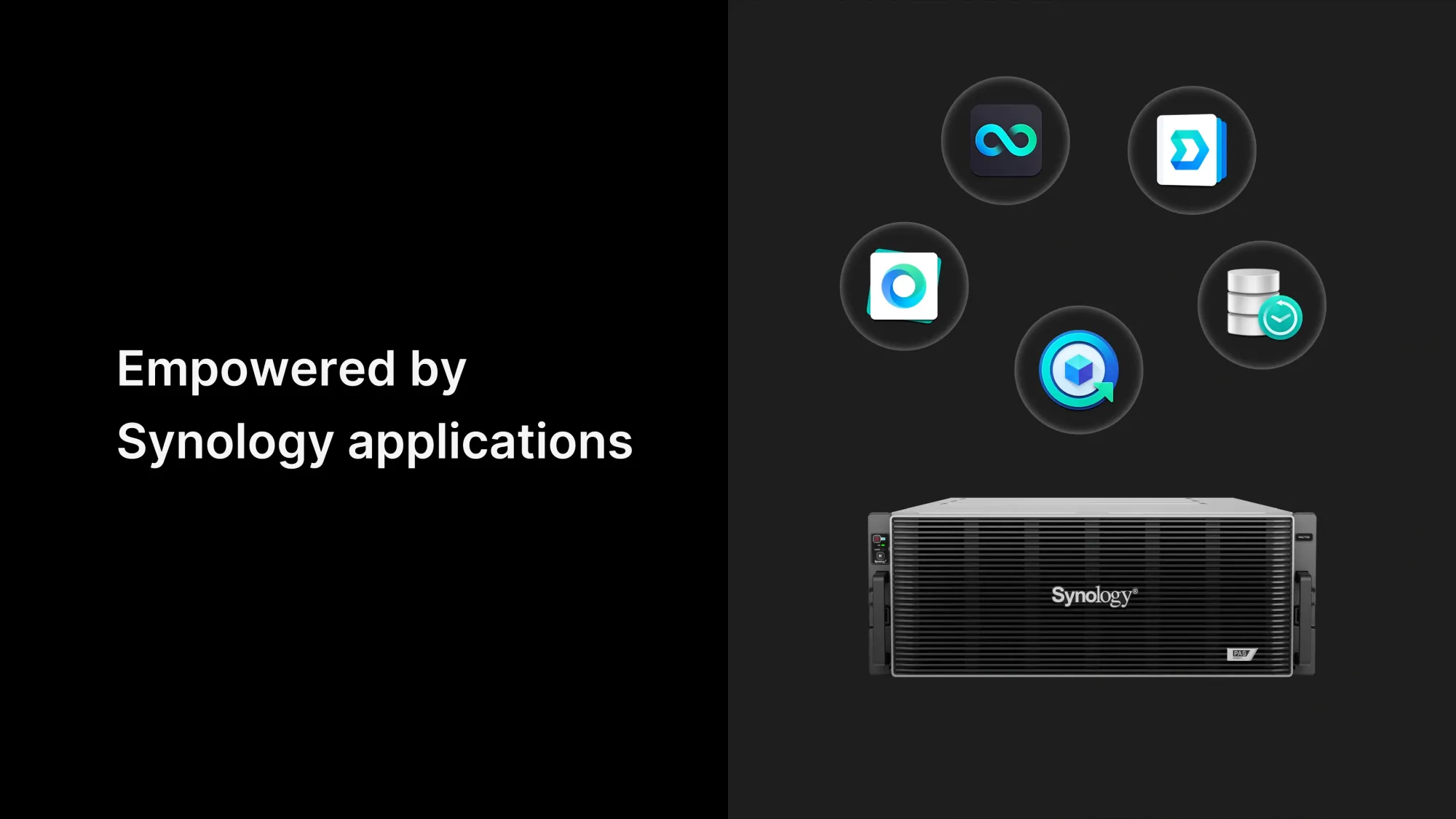

For this system, customers can expect the availability of popular packages like Snapshot Replication, File Station, and Storage Manager. Additional offerings such as Hyper Backup and productivity apps like Drive, Calendar, and MailPlus will follow in 2026.
The system ensures ultra-high availability by combining active-active architectures with flexible storage path failover, guaranteeing absolute service availability. It is performance-tuned with optimized storage and network layers, offering ultra-low latency and maximum throughput for primary storage workloads. Live updates for software and firmware are applied without system downtime, ensuring continuous service availability.
It also features advanced data reduction and integrity, utilizing inline and post-process deduplication with compression to minimize data footprints, and employs next-generation Btrfs for data accuracy. Furthermore, it supports advanced RAID, including RAID-TP and a wide range of RAID configurations, to deliver maximum versatility and data availability.
While on the topic of RAID and volumes, the PAS7700 features a dual pool configuration that, combined with RAID-TP and BTRFS, will allow up to three (3) failed drives with zero data loss.
Another benefit of the new PAS7700 system is its zero-downtime policy. This design ensures that block, file, and application service availability are maintained during software, firmware, or OS updates. Updates are performed one controller at a time, with workloads seamlessly transitioning from one controller to the other during the update process. The same policy applies to drive firmware and application updates.
PAS lineup
The PAS7700 launches globally today, with the more compact 2U PAS3600 arriving later this year. The 12-bay PAS3600 takes a cost-efficient approach, utilizing SATA drives and offering reduced network expansion capabilities compared to its larger counterpart.
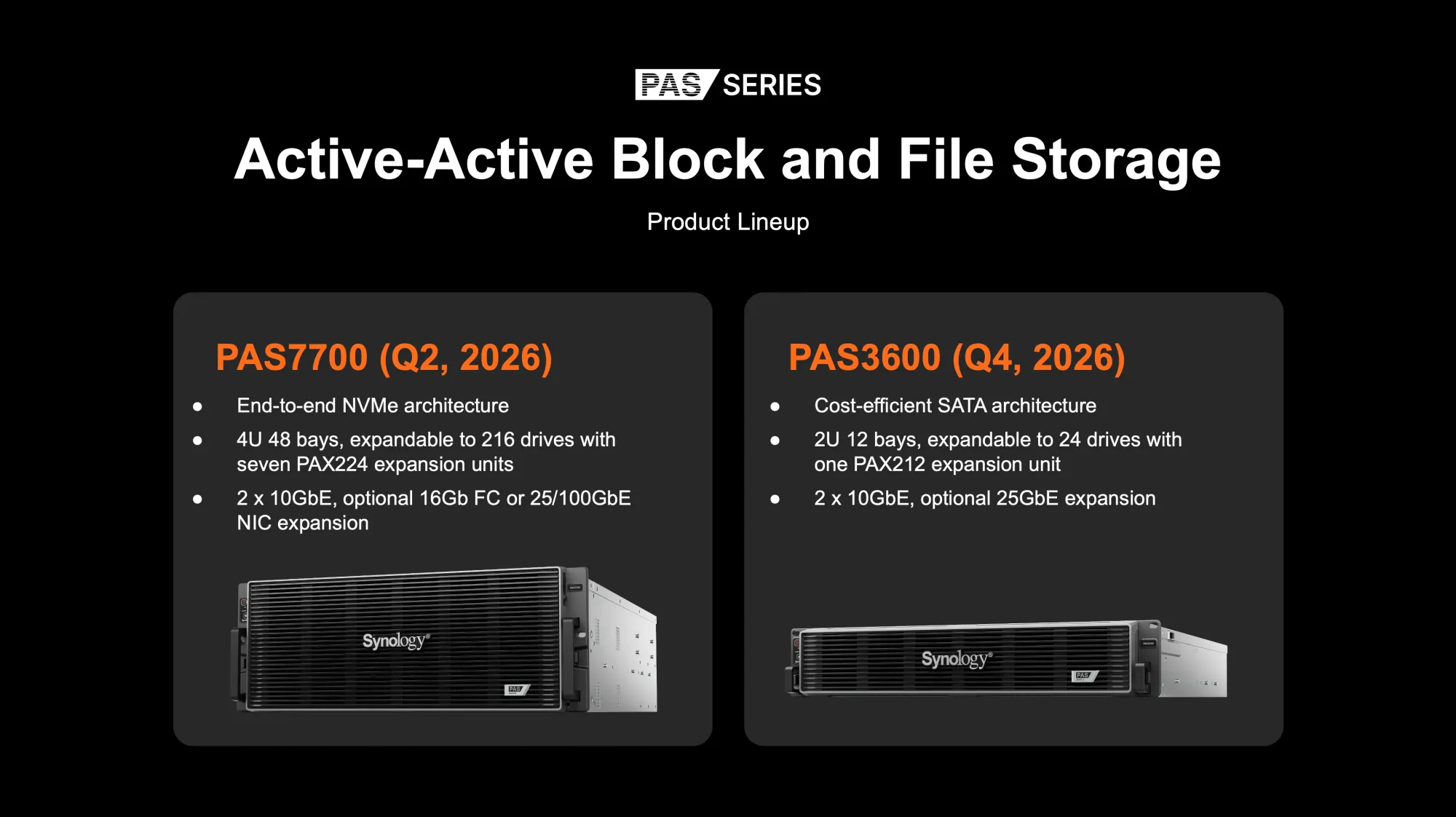
The PAS series feature set establishes it as Synology's highest-performing lineup, with only the HD/SA series providing greater overall storage capacity.
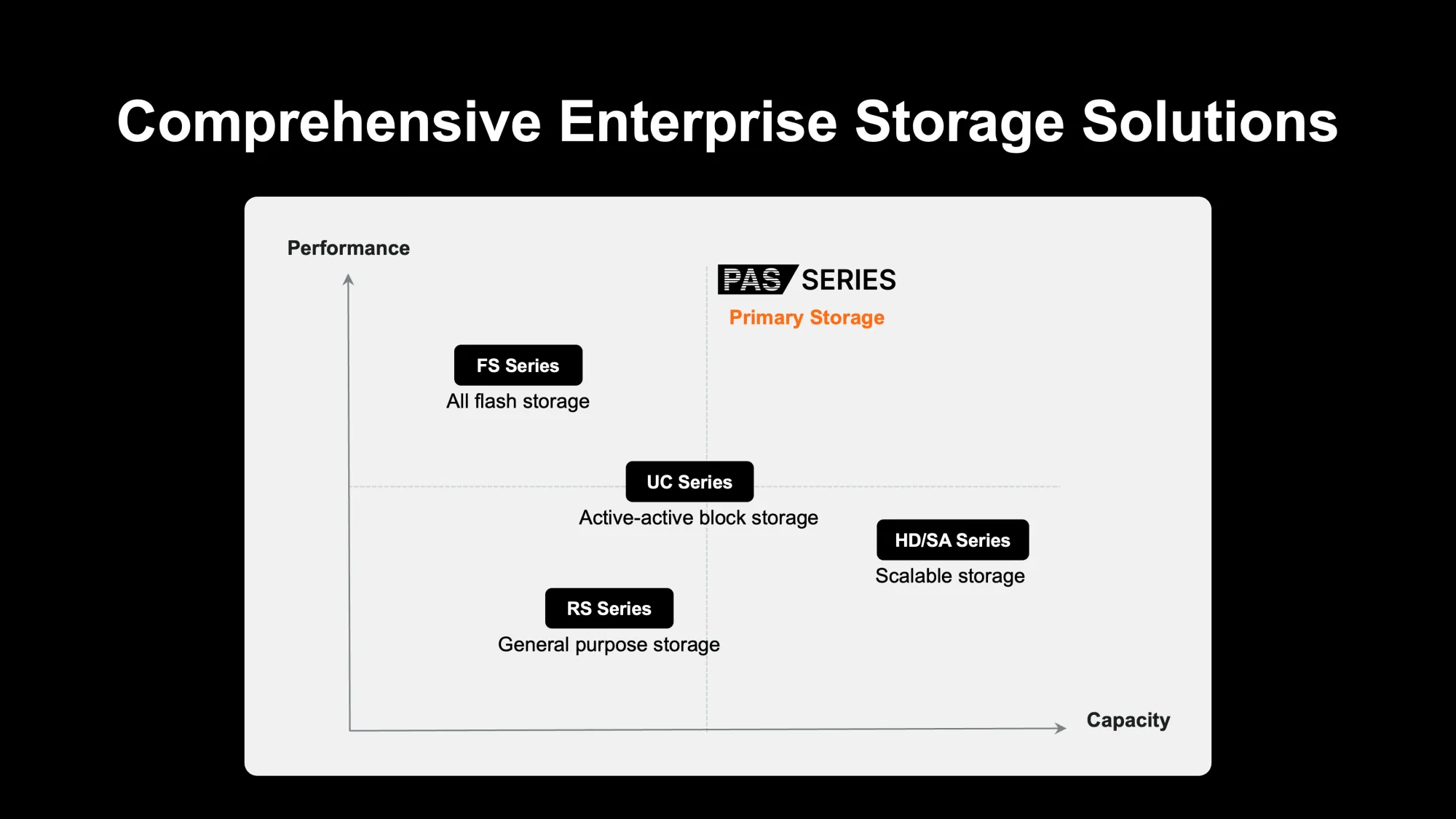
While the PAS7700 series currently targets a niche segment of Synology's existing customer base, its competitive performance and aggressive pricing could position it to capture significant market share. For the first time, Synology has a product capable of challenging established enterprise competitors. Whether it will maintain this foothold and gain broader adoption remains to be seen.